Here's the complete winner's list. Well... I got a few right (see results in red):
Best Doc on Contemporary Theme (Domestic): How To Die: Simon's Choice
Best Doc on Contemporary Theme (International): How To Change the World
Best Doc on Current Affairs: The World: Outbreak - The Truth About Ebola
Best Arts Doc: Amy
Best Historical Doc: Attacking the Devil
Best Science Doc: Oak Tree: Nature's Greatest Survivor
Best Natural History Doc: The Hunt: The Hardest Challenge
Best Entertaining Documentary: Secret life of 4, 5 and 6 Year Olds
Best Doc Series: The Murder Detectives
Best Constructed Doc Series: The Real Marigold Hotel
Best Cinema Doc: Cartel Land
Best Newcomer Doc: Where You're Meant To Be
Best Student Doc: Women in Sink
Best Doc Presenter: Paul Mayhew-Archer
Grierson Trutees Award: Louis Theroux
It's been another great year for factual film and television, providing me with all of the inspiration I need to grow my own factual career. These are the best of the bunch and I can only watch and learn from them all in the hope that one day, I might be even half as successful.
Showing posts with label factual. Show all posts
Showing posts with label factual. Show all posts
Tuesday, 8 November 2016

Wednesday, 2 December 2015
Dreams of A Life
We all dream of that life we wished we'd have led, we all dream of becoming someone better, or wealthier, but film-maker Carol Morley takes that dream one step further. She assumes the dream of Joyce Carol Vincent, a lady found dead in her flat having laid there for three whole years. Morley turns this hopelessly sad situation into a film about a young woman with lots of friends and lots of dreams, with vibrancy and life seeping through the screen.
It is at heart, an art-film with an essence of docudrama to fill in the gaps of Joyce's story where there is no record. We do not meet her family. We do not know the whole story. In fact, there is a total lack of any solid evidence of how Joyce spent her time and how troubled she really was. Yet, amidst such a lack of information about her, we are presented with a film that is full of character and one that acts as a respectful memorial to her life.
Carol Morley 's affection for the story is evident in her production. The careful casting of the beautiful Zawe Ashton and the genuine shock of the contributors we meet along the way, on hearing about Joyce's fate almost draw us to keep watching. We want to know what they wish to know, how this beautiful, apparently life-loving girl, came to be forgotten.
The aesthetics were perfect - shadowed rooms in which Joyce always carried a glow. SFX of dripping taps and old 80s music adding character even to stone walls. We have all had moments in our lives where we pretend to be happy, where we tell others (and ourselves) that we are fine, but there is a deep wound that Joyce was hiding and although we're never quite sure which of her experiences hurt her most, we cannot tear our eyes away from trying to work it out. We watch her miming to her beautiful reflection in the mirror, we hear recordings of her singing. Joyce is living and breathing in the film, without ever actually being there. As an audience we want to save her, to reach into the screen and to be her friend, for the story not to be real. We want her to be remembered and Morley in this, does beautifully.
We find ourselves stunningly moved by a news article that we may have perhaps glanced over before. Suddenly the story is a life, and the life is one we care about.
I can't say much more, but the intimate and tragically beautiful dramatisation of Vincent's life, carried by the painful interviews of those who knew her, is just a wonderful and respectful memorial, to a young woman who met with tragedy. It is one of the most incredible factual films I've seen in the last few years, particularly surprising as there is, as the situation suggests, a significant lack of fact. I feel as though we pay our respects to Joyce and many others like her we will never know about, when we watch this film.
 |
| production-designer.co.uk |
 |
| campfilms.co.uk |
Carol Morley 's affection for the story is evident in her production. The careful casting of the beautiful Zawe Ashton and the genuine shock of the contributors we meet along the way, on hearing about Joyce's fate almost draw us to keep watching. We want to know what they wish to know, how this beautiful, apparently life-loving girl, came to be forgotten.
 |
| madman.com.au |
 |
| moviemail.com |
 |
| cineplex.com |
The aesthetics were perfect - shadowed rooms in which Joyce always carried a glow. SFX of dripping taps and old 80s music adding character even to stone walls. We have all had moments in our lives where we pretend to be happy, where we tell others (and ourselves) that we are fine, but there is a deep wound that Joyce was hiding and although we're never quite sure which of her experiences hurt her most, we cannot tear our eyes away from trying to work it out. We watch her miming to her beautiful reflection in the mirror, we hear recordings of her singing. Joyce is living and breathing in the film, without ever actually being there. As an audience we want to save her, to reach into the screen and to be her friend, for the story not to be real. We want her to be remembered and Morley in this, does beautifully.
We find ourselves stunningly moved by a news article that we may have perhaps glanced over before. Suddenly the story is a life, and the life is one we care about.
 |
| theartsdesk.com |
 |
| Joyce Carole Vincent |
Thursday, 19 February 2015
Nowhere to Call Home Q&A
Monday 16th February 2015
Frontline Club Screening
Nowhere to Call Home - Q&A with Director Jocelyn Ford
http://www.frontlineclub.com/
Jocelyn: thank you all for watching and before we start with
questions I just want to thank a few people. My editor is here. She took the
first pile of material and said oh gosh, I’ll get you something in three
months. Anyway, years later, we have a film. Also I believe some Kickstarter
donors in here too. I had a lot of support from other colleagues in Beijing,
some of whom are here. Mary’s sitting in the back, she went to yoga and every
time I had a terrible problem with the film, she was there to listen. So
anyway, thank you all very much and if you do have any questions.
Frontline Club Screening
Nowhere to Call Home - Q&A with Director Jocelyn Ford
http://www.frontlineclub.com/
 |
| tibetaninbeijing.com |
Q: It’s really
impressive how much access you gained to Zanta and Yang Qing’s everyday life,
not only with their families but also their schools, the more institutional
areas. I was wondering if you could talk a bit about the different obstacles
you faced gaining access, not only in the village but in the city.
As you may have noticed, I have never made a film before and
I had no idea how to go about it. But what I was told is that you must have one
important thing, and that its trust from the person in your film. And so Zanta
gave me that trust within 20mins of our conversation unbeknownst to me, for
years. That she thought because I sat down and talked to her that we had this
connection in a past life. And I honestly did not know that for many years
after I started working with her, and started the film. But with other people
in Beijing it’s a lawless sort of place so, I would show up at the police
station and they would have to figure out what to do with me. They could have
shooed me away, they could have told me I couldn’t do this but I don’t know if
you noticed when she goes to get back her items at the police station, the
authority never looked at me once. He brought her into the back room and said
‘who is that woman’, she said ‘it’s a reporter’ and then he came out, and I
think he did a performance. He wanted to show that he was being fair, because
when he didn’t establish eye contact with me once, he pretended I wasn’t there
and when we exited the police station a bunch of Han Chinese street vendors
pleaded with us to go back in and represent them because they were going to be
charged a fine to get back their items. So, that’s just one story. I was just
there and I did what I thought I should do.
Q: Once the police
knew you were a reporter, was it a concern for them who you were a reporter
for? Who you were reporting to?
So, as many of you in this room know, in Beijing you’re
required to register as a reporter and so the police would come and look at my
card and call up their colleagues and I’d have to write down all my details. So
they knew who I was with but I don’t know if that made a difference.
 |
| filmplatform.net |
Thank you very much for that question. Often times in
screenings I like to point out that Tibet is a huge area, the size of Western
Europe and there are many different cultural groups within it, many different
languages, perhaps 50. When is started the film someone told me there were 25
different languages, now I’m told there are 50.Not a lot is known about it
because there are a lot of restrictions on journalists or outsiders going into
the area.
This was actually filmed in Sichuan. There are more Tibetans
living outside the Tibetan Autonomous Region than there are living inside of it
and that is also I think, not very well known. There are several provinces with
a lot of Tibetan communities so when I went to her local area – and according
to official rules, journalists are supposed to be able to travel there without
impediments or without registering in advance, to the Tibetan areas outside of
the TAR. You need special permission to go to the Autonomous region. That’s
often not upheld as many of you know, but that was the official rule and this
was in 2009 and the Olympics had just come along. I spoke to the local police,
who did call me into the police station and said well the rules say ‘I’m
allowed to be here’ and they said ‘yes, we know that. You’re here for a family
visit so, be good’.
Q: Firstly that was
brilliant thank you so much, I really enjoyed it. You said this was in 2009 so,
6yrs later, are you in regular contact with Zanta?
Yes, Zanta just sent me a few WeChat voice messages. She’s
in her village for new years as we speak. There was a big religious ceremony
there today and she and her son went back. This is the second time that her son
has gone back since that agreement which both sides broke. When he was younger
she was very reluctant to allow him to go back because she thought she might
never see him again. He might not be allowed to come back to education. But
he’s now 14 and he can take care of himself.
 |
| facebook.com |
Q: And how’s he
doing, is he doing well at school?
His English is excellent, his math, (gestures ‘not so
much’). He’s had a lot of difficulties in school. The teacher has been very
unwelcoming towards Tibetans and has told other children not to associate with
him and I think, she’s trying to force him out. But I should say that he’s now
in a public school and has been there for about three years and you do not see
that school in this film.
So it’s not been easy but last week I believe, maybe a bout
ten days ago he actually asks his grandfather if he could have his ID because
he would like the study in the United States.
So this is very much in play. Apparently the last message I
received is that the grandfather, Aba, had agreed. And said, ‘I wouldn’t give
it to you if it was that lousy foreigner who wanted you to go but if it’s you
who really wants to go, let’s go’.
Q: And how would they
afford it?
There’s a little bit of a back-story. When I screened, did
the premiere in the US at the Museum of Modern art, I got a phone call from
somebody who says, ‘hi’ – perfect American accent – ‘I’m in Queens, and Aba is
my relative’. Yeh, no way! He said ‘yeh, we want to go see the film’. I said,
‘well I’m sorry it’s sold out but I’d like to meet with you’. And so I went to
their house and the person who called me was the 25yr old son of Aba’s cousin I
believe, or something like that. And so, his dad grew up with Aba and they
left, the 25yr old, left the country aged 10, walked to India and somehow they got
their family – and almost died on the way, aged 10. Somehow the family got to
the US, I haven’t heard the whole story and seven years ago, the 25yr old man
managed to get from India to the US where he is now a marketing manager for
Horizon.
 |
| facebook.com |
So, then they said, ‘what are you going to do about the
kid’s schooling’ and I said, ‘they are not a lot of great choices out there’.
So he said, ‘why don’t you have him come to the US’ and I said, ‘he doesn’t
have his ID’ and the 25yr old’s dad said, ‘actually, I visited my village a few
years ago, I’m the one who convinced Aba that education is good and that he
should allow his son to continue studying in Beijing’. He said, ‘I can get that
ID’.
It’s a long story, I won’t go through all of it but needless
to say, Aba was not very happy with all this. There were a lot of negative
messages going to Zanta but the guy in the US was saying everything’s fine.
Anyway, it might be cool, it might be fine and if so, I will probably be
looking for a home stay family for Yang Qing because the neighborhood that his
cousin, or whatever the relationship is, lives in, is not that great and he’s
quite busy and I wouldn’t want, I don’t think Zanta wants him in the city
wandering around. So then he went and
had all these ideas about America.
Q: How far back does
this prejudice against Tibetans go?
First of all I’d like to say it’s quite mutual. From what I
can gather. Are there any Tibetans in the audience? Are you interested in
answering?
Audience: Well I mean obviously the invasion in 59, I guess it
predates that really.
So the words that are used in Mandarin, tend to be
‘barbarian’, not very complementary. Going back way back in history. Anybody
who was not Han Chinese - and what is Han is a whole other debate we’re not
getting into tonight - was considered to be inferior in terms of culture. So I
think that’s a deep-seeded sort of feeling.
When I do these screenings in China, I often bring up one of
the Tibetan saying which I don’t know if you know, there are a couple in her
village that go like, ‘there are as many good-hearted Han Chinese as there are
white crows’. And I don’t know how old this is but I think it goes back pretty
far. So I think there’s a lot of work to be done to build mutual respect.
Q: When did you
decide to do the film?
I didn’t actually decide to do it, my producer decided I
should do it. I have a producer, who is also a filmmaker and a jack of many
trades, who basically twisted my arm into making this. I was his idea.
 |
| facebook.com |
So he saw this video and a bunch of old street journal
colleagues watched it and said ‘my god, this in 3mins encapsulates so much more
than you could ever say in print. You must do a documentary’.
So, I said ‘no, I have no idea how to go about doing it’ and
I considered myself a professional so I wasn’t going to do something I didn’t
know how to do and my producer said, ‘oh I’ll give you everything, a cameraman,
you don’t have to raise money’ and I was like, well how can I turn that down.
Of course, then he got busy and the money ran out and I had to do all these
things I didn’t intend to but essentially he got the ball rolling.
 |
| facebook.com |
On two or three of those occasions I had one but most of it
I actually ended up doing myself, as you can probably tell. I had no training.
The cameraman was supposed to go with me to her village and I was off in Acha
(China) doing a story on the tsunami anniversary, and I got this phone call
saying, ‘sorry, I have a paying job, I can’t go with you. You’re on your own’.
So I arrived back in Beijing in the morning, picked up a camera I didn’t know how
to use, asked, ‘what could possibly go wrong’ and headed off. And yes, the
camera did stop working while I was there but we managed, I had a backup.
Q: Thanks it was
really great. Can you give us some examples of reactions you’ve seen so far,
both on the Tibetan side and Chinese side? How has it been received?
I’ve had both but I must say I’m very pleased that I’ve had
more positive reactions than negative, on both sides. A lot of Han Chinese are
totally shocked because the media says ‘we treat Tibetans so well, we give them
all this money, what are they complaining about?’, there really is a lot of Han
Chinese that do not understand where this animosity comes from. ‘Why don’t they
appreciate what we do?’ – I consider this very media driven. So when they see
the film, they have to come to grips with the difference between what they
thought before and what they see here. Because Zanta is amazingly frank, she’s
incredible, and because they don’t see this as a propaganda film.
 |
| facebook.com |
I had the privilege of doing a screening one day in the same
afternoon, both for the Chinese academy for social science ethnologists, some
of them who are advising the government, and then the high school kids. The
ethnologists, some would come up and say, ‘oh you must have missed our policy
that we send all migrant children to school’ or something like this and I was
like, ‘no, what happens on paper doesn’t really happen like that in reality’.
So I had some comments that ran along for 5-10 minutes, from Tibetans and Han
Chinese where they’re not quite sure what they’re trying to say but I get the
feeling they’re very uncomfortable. And sometimes it’s like ‘our policy is not
like this’. On the Tibetan side I’ve had young Tibetan, men have come up to me
and said, ‘thank you so much for making this film’ and one said it reflects his
mother’s experience but she’s not in a position to talk about it or have it
heard. And some have said, ‘you can’t make this film because you’re supporting
the Beijing government’s propaganda that we’re less developed, that we’re a
backwards society’ or ‘you’re distracting attention from what is really
important to us, or to those people who are making these comments which are the
bigger political issues’.
And after long conversations with people who disagree often times
I find that they often rethink things so, if that’s helpful…
Q: did you have to
get permission to show this in Beijing, and the reason I ask is thinking of the
theme there, of two warring clans, that is often the propaganda you get from
the Chinese government about why they
invaded Tibet otherwise they would have destroyed themselves through civil war. In some sense that theme
comes back.
As a foreign correspondent we don’t need to get permission. So,
if you think this could really get permission from the state apparatus I’d be,
I’d love to know your connections. I know that on Chinese producer, after
seeing the film was so excited he actually went to the state TV, CCTV, much to
my surprise and they said well, if I’d been a Chinese person getting involved
it would be a great film, but I’m not so no thank you. They saw it as Western
propaganda. I find when I speak with people who have a political stance, often times the Americans
will say, ‘oh my gosh the Chinese are going to use this as propaganda’ and the
Chinese will say, ‘oh my gosh the Americans are going to use this as propaganda’
so I feel like I’ve probably got it about right.
Q: Thank you very
much, your film was very different from other documentaries that have been made
about Tibet, which was really interesting. A couple of things, when Zanta was
first talking she said there were 1000 Tibetans in Beijing and I don’t know if
you’re still there but I was wondering if there’s a bigger influx now and how
the racial the aspect is changing, if at all, within the city?
 |
| contented.cc |
Well I’m hoping that by showing the film and talking about
racism and prejudice and by bringing in documentary films from other countries
that deal with these issues, that we can raise the issue. Because unfortunately
I must say I haven’t noticed any awareness, racism and prejudice are things
that happen in the United States, not there. People I show it to in China say,
‘oh no, it doesn’t happen here’. They’re just unaware. There are about 100 [Tibetans]
from her [Zanta’s] community. Basically, after the Olympics, almost everybody,
all young people came out. And some of them have now gone to other cities to
sell at trade fairs and stuff like that, but there are very few people left,
young people, left in their village.
They, to the best of my knowledge, the self-immolations are
not foremost in their minds. I think that surviving, and economic survival is
at this point, what’s of most concern to most of the people in her community.
 |
| facebook.com |
Yeh, it says next door, in their context that’s not that
far. Actually they were picking the grass worms used for Chinese medicine in Qinghai,
I believe when they met. So they were in yet another location. She left, when
she first left to do this, she was about 14 and they got chased across the
plains by the locals in Qinghai, the local Tibetans and she was quite afraid
for her life because they had guns and they had two days til they could get to
a town. So she’s had quite a lot of drama in her life.
Q: Thank you I
thought it was an absolutely fantastic film. You said at the beginning, you
were very candid through the whole film, that you didn’t know what you were
getting yourself into and it became very clear as things were going on that
circumstances were changing and consequences were unknown. I was originally
going to ask the question…the story so far seems to have had a happy ending,
would you have, if you went back to the beginning, would you still go ahead
with the film? I suspect you might say yes to that. So, my question is more,
were someone in a similar circumstance to you when Zanta first approached you,
would you advise them to follow the same path, would you advise them to get
involved and if so, what advice would you give them, about exercising caution,
about how to interact?
 |
| facebook.com |
I mean when I first found him a school I first suggested to Zanta
that she call an NGO and see if they could provide something. Well, she did
that and they said sorry we can’t do anything for you. And then, I said ‘is
there a migrant school in your neighborhood’. She said yes and she went, and
this was on a Sunday and the next morning at about 7am she called me and said
‘I’m at the school, it’s fine, let’s enroll’. So by noon the child was enrolled
and I asked her to pay 100, or 200 Renminbi (about £20) for the semester, just
to make sure that she was invested in it. So, the approach that I’ve taken is…
Q: It was more,
certain actions you took to try and help, it didn’t seem at all certain that it
would have helped, I mean it did in the end for example, taking the legal
document to Aba, did you not think that could have gone horribly wrong or even
going along with Zanta to police stations and to her village, did you ever
think my involvement in this situation could have… I suppose my question is, if
people find themselves in this situation, wanting to help, wanting to do
something, wanting to get involved but are scared of entering this alien
environment, would you advise them to proceed with that and if so, what advice
would you give?
 |
| facebook.com |
I mean on many steps along the way I tell her what I think
the stakes are and I tell her I don’t now what the impact will be. And she’s
always decided to go forward.
Having said that, she is planning to leave – she just
arrived in her village because they had this special religious ceremony, but
she’s planning to leave tomorrow – and she doesn’t know if she’s going back.
And I don’t really know what’s happening as we speak. She did tell me she
wasn’t going to take photographs because a woman shouldn’t be seen holding a
camera in her village. I don’t know what other pressures she may be under and I
know that she won’t tell me as long as she’s there. So, I’ll just have to wait
until tomorrow or a few days from now and hope that she can, she will tell me.
Q: How did they
respond to you and how did the respond to the camera? You had some amazing
shots and I just wonder what their initial reaction was.
 |
| facebook.com |
 |
| facebook.com |
But Zanta would always say, ‘who’d be interested in me, no-one’s ever paid any interest in me whatsoever, they’ve just walked all over me’ I mean she has no status, so for years she would say that. And now I think she’s finally beginning to understand because she’s seen the reaction and she’s come to a few Q&As and she’s seen that people like to buy her jewelry a lot. So it’s been a long process in trying to explain that.
Q: My question is
about the filming, I mean you just went there with the camera, not exactly
Hollywood stuff, and I think you had just a one time chance to be in the
village. Did you feel yourself afterwards, missing something from the record,
or did you just record everything?
So I’m a glutton for information, I tend to over-record.
Gigi [editor] will tell you. I asked her so many times how many hours of
footage, she still hasn’t told me.
Gigi: Too many!
Too many, that’s the answer. Was anything missing?
Gigi: Quite a lot of good stuff but the essence was all
there, you can’t have everything in the film.
Yeh I mean it’s a lot. I could make several other films, I
have enough material for several other films. Gigi may be moving onto bigger
and better things. I’m planning on making small clips, not large, long films
but maybe if I could do a curriculum or an online – for either a Chinese
audience or international audiences – put together issue-based footage. I could
do three minute or five minute clips, that could really get into some of the
issues and then have some text to go along with it I think that would be a
great thing to do, if I can find people who’re interested.
I have raised the possibility of doing ‘tolerance,
anti-racism training’ shall we say, in China, for teachers, for other people
who might be interested. I have a couple of people, anthropologists who are
interested in collaborating on something. We have yet to figure this out. But I
think if I could do that then some of the material might be re-worked and
useful in that context.
 |
| facebook.com |
In one way or another. The first screening I did for a
Chinese audience, people who I didn’t know. What seemed to upset some of them
most, they didn’t tell me, I had a Chinese friend come with me to help with the
screening. They all came down to her and said, ‘oh my god, that is so untrue’,
they felt incredibly hurt by the comment that Han Chinese seemed to respect all
the wealth and not respect the poor, that really disturbed them.
And yet you see it in Chinese media or Chinese online
discussions all the time. So I think that has hit a chord with some. Is that sort of what you mean?
Q: After 2008, that
whole fascist Buddhism crash…so hang on a minute this Buddhism is really rather
a sham because they believe in violence and so that whole interest in Buddhism was
fundamentally shaken. Not that people thought that the alternative materialism
was fantastic, but there was significant change in the amount of interest.
Actually, that’s not been my experience at all and it’s been
quite the opposite. I was recently in a small village and I asked a young kid
where he would like to travel most, he probably was a junior college graduate
or something, and he said Tibet. I mean Tibet among young people is incredibly
hot, I would say today. It’s exoticised and people are looking for the
spiritual. So I mean it’s not been my experience but then I only know anecdotal
tales.
It was large, an
amount of business people who had invested a lot in Buddhism, in going there
and building relationships…
I’m not aware of that level, but I am aware that a lot of the people who are trying to help Zanta with her business, also have an interest in Buddhism but I don’t have numbers.
Remember to check out the Frontline Club Screenings here: http://www.frontlineclub.com/
I’m not aware of that level, but I am aware that a lot of the people who are trying to help Zanta with her business, also have an interest in Buddhism but I don’t have numbers.
 |
| tibetaninbeijing.com |
Blackfish
 |
| blackfishmovie.com |
‘Blackfish’ successfully made a wildlife documentary into a
thriller. Experts psychoanalyzing, witnesses testifying, video evidence... all
pointing to one deranged killer, protected by a 1.4 billion dollar corporation
- the 5.6 ton killer whale, Tilikum, owned by SeaWorld Entertainment.
 |
| hommage-orca.skyrock.com |
The film follows Tilikum from his capture in 1983 when he
was just 2 years old. Orcas share a similar lifespan to humans and at just 2yrs
old he was already 13feet long. His first new home was a tiny cement tank in Hafnarfjörður
Marine Zoo, near Reykjavík, Iceland. He was then transferred to Sealand, a 100x50ft pool
where he regularly endured painful attacks from two female orcas, not helped by the fact that trainers
were withholding food. At night he was forced into a tiny metal shack with the two
vicious females and emerged with bloody wounds and scratches.
 |
| Dawn & Tili - greenglobaltravel.com |
He was transferred to SeaWorld, after the death of trainer
Keltie Byrne, in 1991 after she fallen into the whale pool. Although I’m not
convinced the attack from the whales was malicious, I know for sure that it
would not have happened at all, had the whales not been in captivity in the first
place. In 2010, Dawn Brancheau, an experienced trainer, was dragged from the poolside
and held underwater. Her bones were broken, her head scalped and her skin mauled.
This time, it was the whale that came to the trainer, not the other way around.
We cannot argue that THIS time, the attack was not malicious. However we wish
to frame orca captivity and convince ourselves that it has been researched and facilities
are sufficient, every human can see that a tiny pool in the US can never match
up to the world’s ocean. It’s cruel, however we wish to change that image for
our moral conscience and however much we convince ourselves that it’s ok
because it’s in the name of entertainment.
 |
| examiner.com |
I felt on edge every time we watched footage of trainers
interacting with the whales. I was waiting for them to pounce, waiting for them to
drag the next victim to the bottom of the pool as 'Kasatka' did with Ken Peters, who miraculously managed to stay calm and save his breath. It was like watching a tiger
play with its food and all I could think of was the Jaws theme tune as my heart
rate raced to match.
It's not often that I watch documentaries about animals,
mainly because I don't believe that any nature observing documentary can beat
Planet Earth, but 'Blackfish' is different. It explores one of our largest
mammals almost as a human. It analyses his behavior, it points the finger
towards all those times that SeaWorld SHOULD have stopped trainers getting into
the water with the orcas, before the worst happened. But they didn't. They had
all the warning signs but money meant more to them than the lives of all their orcas
and their trainers.
 |
| seaworldofhurt.com |
There was an incredible amount of footage from personal
video cameras, showing some of the most intimate, and scary episodes of the
Tilikum story. Yes, the film is edited so that sometimes, other whales are
shown in Tilikum's stead, whilst the narrator is still talking about him. But
they identify that the audience is intelligent enough to tell a bent fin from a
straight one. It’s a remarkable amount of archive, and I’d like to know more
about its sourcing. As much as the film may be bias against SeaWorld, there is
no doubt that Tilikum’s years in captivity, whether he is representative of all
orcas or just himself, has left his behaviour unpredictable and therefore dangerous.
 |
| melissasmith.hubpages.com |
In the wild, orcas can travel up to 100 miles a day, which
of course, no pool in any location can ever match up to. No pool is sufficient
enough to hold these mammals, and to make them perform, is probably the only
freedom they get. But is it right? Did we not learn anything from Free Willy?
(I'm joking – although you should read this article about how the film casted
it the same year as Keltie’s death: http://edition.cnn.com/2013/10/26/world/americas/orca-trainer-tilikum-keiko/
). The argument of the film is not that orcas, or even Tilikum, are inherently
bad, no, in fact it's clear to see that many of the orcas have real bonds with their trainers. It is that man-made captivity frustrates them, and pressures them into
the unpredictable. Wouldn't you get a little bit angry being dragged from your
family and put in a tiny pool when you are used to the freedom of the ocean. Will
it ever really be safe for trainers to swim side by side with whales in captivity?
 |
| outsideonline.com |
The film does a great job of pulling together the facts of
SeaWorld’s neglect, through some emotionally driven interviews with those who
knew the whales and the victims. There is a particularly moving account from the
mourning fiance of Alexis Martinez, a trainer murder by a SeaWorld killer
whale, at Loro Parque, renowned for its poor facilities and lax training
requirements. She reveals that she was told Alexis was fine, before stepping
into the morgue and seeing his body, with his chest completely deflated from the
attack of orca Keto. I cannot imagine what that must have been like.
 |
| (in red) Tilikum's enclosure after Dawn's death |
There are well-researched extracts from the courtroom
transcript, personal video recordings, an interview with a whaler, images of the enclosures, SeaWorld
advertisements AND the revelation that after multiple opportunities to comment,
SeaWorld declined the offer to have any involvement with the film. They say
actions speak louder than words – and the effects of this film, carry that
message quite profoundly.
 |
| thewire.com |
It’s not as clear cut as the internet suggests. It seems that everyone has a vested interest in either liking or disliking the film. Many people
have challenged ‘Blackfish’ for inaccuracies and accused it of exploiting and
sensationalising tragedy- of which I do agree on the premise of Keltie’s death
but not on a wider scale. I also disagree with the stance taken on Taku as he 'tries to crush' SeaWorld trainer, Sam Davis in 2005. there is no evidence that it was done out of malice... how is a 5 tonne whale supposed to know that splashing about with a human might crush him to death? Similarly, people have slated SeaWorld and accused it
of concealing tragedy without truly understanding the facts. We know that
SeaWorld has since, taken action. Michael Scarpuzzi, the vice president for
zoological operations and trainer for SeaWorld San Diego said in 2013,
‘"We have altered how we care for, display
and train these extraordinary animals. We have changed the facilities,
equipment and procedures at our killer whale habitats. The care and educational
presentation of these animals at SeaWorld has been made safer than ever’.
So
there are faults and misconceptions on both sides of the argument.
 |
| huffingtonpost.com |
My opinion still stands that as a film, ‘Blackfish’ was
brilliant. It may not have been directed brilliantly, due to it mainly being made up of contributor response and archive, but it was well put together. I find it hard to deny that you will ever be more moved or
opposed to animal captivity than after this film. You end up loving and hating the
killer at the same time and despite internet comments stating that it is an
insult to Dawn’s death, I came away with a remarkable respect for the trainers that work
with these animals and with an awareness that perhaps what we sacrifice in the name of entertainment, may not be as magical as we'd like to believe. In my view it’s a ‘must-watch’ regardless of which side of the fence
you sit on.
More on 'Blackfish':
Here's SeaWorld’s reaction to the film: http://blackfishmovie.com/news/blackfish_seaworld_bites_back/15297?seaworld_reacts_button
Here's a blogpost about how the film is misleading: http://melissaasmith.hubpages.com/hub/blackfish-film
Read more about Tilikum’s Story here: http://www.seaworldofhurt.com/features/30-years-three-deaths-tilikums-tragic-story/
Here’s a report on Tilikum’s Treatment: http://bc.ctvnews.ca/new-video-unearthed-of-unacceptable-killer-whale-treatment-1.1962379
Here’s some information on the death of Alexis Martinez: http://www.huffingtonpost.com/tim-zimmermann/death-at-loro-parque-the-_b_902863.html
And finally, here's a much more extensive review of the film 'Blackfish': http://www.rellimzone.com/2013/12/movie-review-blackfish-2013/
Tuesday, 10 February 2015
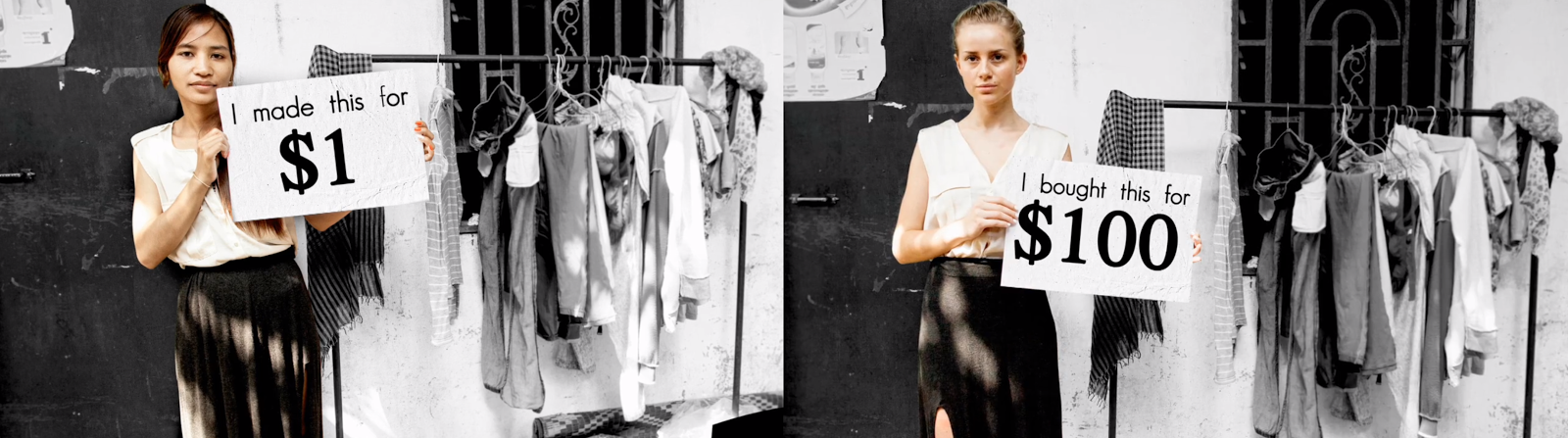
'Sweatshop: Deadly Fashion'
'Sweatshop' is a Norwegian Format, created by Norway's largest newspaper Aftenposten, that sends young
clothes lovers to experience life for sweatshop workers in Cambodia and
although it may have thrown out mixed opinions online, I absolutely loved it.
It's not our usual, pack your naughty teens off to a third world country and
let them see how lucky they really are, it's a wake up call to all of us and I
think it has the potential to branch out to other issues too.
Watch the 5 x 10mins episodes here: http://www.aftenposten.no/webtv/SWEATSHOP-ep-1---How-many-will-die-here-every-year-7800843.html?mostSeen=true
.jpg) |
| Spending the night with Oudum - khmertimeskh.com |
What makes it even more brilliant is the fact that it exists
in 10min episodes online - I think Norwegians are grasping the future of
television quicker than the rest of us perhaps (even if it's not intended as such). We watch everything online now,
and don't want to dedicate hours of our dwindling spare time, watching a
depressing programme about how life is unfair. But in 10min stints, we find
ourselves wanting to watch on, wanting to click through to the next link. And I
don't think it's a format that couldn't just as easily return in Norway, but
also work here in the UK. It would work to pack normal everyday people off to
other cultures to learn, not what amazing sights the countries
have to offer (this isn't another Joanna Lumley special) but to see what life has
to offer for those whom live there. Ordinary people, meet ordinary people and
create some rather spectacular television.
Not only was the platform great, the content was too. It had
reasonable production value although, as contributor Ludwig shares, it was difficult
trying to get any sweatshop to allow them to film. With conditions exploiting a
lack of toilet facilities, lack of good food and with employees earning just $3
a day and working long hours - I wonder why!
 |
| sobadsogood.com |
But the team succeeded and what came out of that, was a
glimpse at what life might be like for the average working class Cambodian. We
follow our three young protagonists, Frida, Ludvig and Anniken as they stand
surrounded by overcrowded trucks delivering hundreds of workers to factories to
earn their living. With them, we meet Oudum who earns $130 a month and pays $30
of that for a small room in Phnom Penh and with water &
electricity, it often reaches up $50 a month. That's 17 days work and she works
7 days a week for between 11 & 13hours a day, except Sundays when she
works for 8 hours. Oudum is incredibly blunt about her situation, she does not cry, she does not falter. She is perhaps, the strongest woman our teens have ever met.
 |
| dressedandstripped.nl |
Ludvig is from Oslo, he seems like a normal laid back kind
of guy, who enjoys looking good. He is moved often by the struggle of those he
meets in Cambodia and seems more sympathetic to their plight than the girls. He
is a character with whom the viewer can really identify and he’s very likeable.
During their stay, the three Norwegians see protests for a
fair wage and are moved by the determination of the Cambodians to get up each
morning and go to work. Their main plight is just for their minimum wage to
increase from just £60 to £100 ($160) a month to feed their families. Ludvig
was moved by this so much that he decided to tattoo this sticker used in the
worker's protests, on his ankle...
Ludvig: His
passion to their cause really impressed me.
 |
| so-trendy.fr |
Frida is young and naïve but you can see she genuinely
cares about the lack of worker’s rights and is particularly moved by a lady who
tells her that her mother died of starvation when she was young. Although she is
moved by the situation of those she meets, she does not seem like the type of
person to act upon it.
The teens come
out with some pretty strong opinions off the back of this day spent listen to
the woes of activists and garment workers:
 |
| rifeoffame.com |
Frida: I had to
hold her hand to show how grateful I was to hear her story.
Anniken: When you
begin talking to a person you see she is just as valuable as you are… She is just
19 and she tells me that her mother died of starvation. What kind of life is
that? How must it be yo begin life like that? Her mother did not die because of
illness or because she was killed. She starved to death because they did not
have money for food.
Ludvig: I don’t
have words for it. It’s just so extremely unfair. And the truth is that we are
rich because they are poor
Frida: I am just put out by all this. I never imagined these
things were real.
Anniken: We will
influence people to care. That is our work now.
 |
| fr-fr.facebook.com |
However, I wondered for 17yr old fashion blogger Anniken,
will this change anything about her career in clothes? Will it truly be her
work now? She went to Cambodia having run one of the most successful blogs in
Norway, with 10,000 readers a day, and hadn't paid for any clothing for a year
as it was sent to her free. She was moved to tears in the programme and came to
some profound conclusions about their role in motivating change, but I wondered
if it would change the way she approached her blog... and indeed, her 81,000
Instagram followers - why not read her blog for yourself and see just how much
of an impact it really had: http://annijor.blogg.no/
The programme, if it didn’t necessarily have an impact on
the lives of our Norwegian teens, it certainly changed their opinion from, ‘it’s
always been like this so they’re used to it’ to ‘it’s not acceptable’ and at least Anniken is standing up for the values she gained from her trip. http://www.sbs.com.au/news/article/2015/01/29/what-three-fashion-bloggers-learned-after-month-cambodian-sweatshop
And it made
an impact on me. I, like so many others have an eye for a bargain, and now
again it does cross our mind that people work long hours on no pay to make them
for us. But you just don’t think that because you buy an item of clothing for
£5, that people die of starvation because they cannot afford food. It most
certainly made me think more about my love for bargains. I’d be interested to
see Frida, Ludvig and Anniken a year from now and see what differences the experience
really inspired in them too.
 |
| Oudum & Anniken |
The production was one of unexpected quality from my point of
view with some well-chosen, and well-timed changes in tone throughout with a
suitable soundtrack. Overall, I think I'm really going to look into taking a
similar format on myself. It has so much potential, not only to work well as a
format but also to act as aid to leverage change. Definitely can't wait to
start brainstorming this one.
Make sure you watch the series yourself, go on, it's
only 5 x 10mins of your life and might just change just a little part of it!
WATCH IT HERE:
Here's what others said about it: http://www.reddit.com/r/Documentaries/comments/2tedx5/sweatshop_deadly_fashion_2014_norwegian_fashion/
Thursday, 29 January 2015
20,000 Days on Earth
‘20,000 days on Earth’ and Nick Cave has ceased to be human.
He’s just one of those guys with his head in the clouds, swimming along nicely
with his lyrical tide. But this film, shows another side to Nick Cave. A side
of values and of honesty and of being human, despite his best efforts.
Throughout the film we are treated to a world of Cave’s memory. We hear about his relationship with his father, the kind of illusive yet doting parent you seem to find in any dance film or x-factor back-story only this time it is genuinely heart-wrenching to hear. We visit what seems like our film-makers archive, filled with Nick’s past, where he takes us through performances of the Bad Seeds and points out a particularly vivid memory of a German man urinating on the guitarist. If Nick’s greatest fear is losing his memory, he need only visit here to catch the tide back to his life in Brighton.
 |
| nickcave.com |
 |
| smh.com.au |
The film masterfully merges reality and some inventive staged reality in a
collage of performance archive, some very cinematic re-constructions, some
extraordinarily sinister discussions in a car and a rather open interview with
Cave. It seems that this in itself, is a statement about the kind of person Nick
Cave is, he is his past, he is his music career, he is, who is he is – and that’s
it.
 | |
| sweetarchiveblog.com |
The most beautiful moment for me is when Cave admits his
deepest fears.
‘What do you fear?’
‘Losing my memory’
And when asked why, his simple answer is ‘memory is what we
are’…and he’s right. I don’t think anyone’s ever got it so right.
 |
| theguardian.com |
Throughout the film we are treated to a world of Cave’s memory. We hear about his relationship with his father, the kind of illusive yet doting parent you seem to find in any dance film or x-factor back-story only this time it is genuinely heart-wrenching to hear. We visit what seems like our film-makers archive, filled with Nick’s past, where he takes us through performances of the Bad Seeds and points out a particularly vivid memory of a German man urinating on the guitarist. If Nick’s greatest fear is losing his memory, he need only visit here to catch the tide back to his life in Brighton.
 |
| nypost.com |
He is not a man of particular emotion, at least not
visually but there's clearly a hell of a lot going on upstairs. He never seems fully present in any conversation. It’s almost like he
is formulating lyrics in his head at the very same time that the moments before
him become the memories he so adores. We see his persona spring to life at
seeing and sharing the stories of his past, vividly recreated for us through
archived images and film and yet simultaneously, Cave lives every one of his
days in existential crisis, but manages by getting his head down, shutting out
the world and writing something beautiful with it.
 |
| blogs.indiewire.com |
He is, on reflection, more human than we thought. He’s made
mistakes, he’s grown up, he’s fallen in and out of love and ultimately he quite
happily loses himself in a world where memories of all of this cease to be
memories at all, they are turned into lyrics, put to music and actually begin
to feel real again. The great thing about a seemingly candid interview with a
star is that you see things you never knew, you find out that actually, beneath
all of those well-known anthems, is a person and ’20,000 Days on Earth’ succeeds
in saying something quite profound about the art of songwriting, as well as
celebrating Cave for the oddball genius of a great that he is.
 |
| collider.com |
Subscribe to:
Posts (Atom)